Overview of Fertility Awareness-Based Methods
What is fertility awareness?
Fertility awareness refers to basic knowledge of the male and female reproductive systems as it relates to fertility and the ability to reproduce. It is knowledge about the signs, symptoms and patterns of fertility during the menstrual cycle and throughout the woman's reproductive life, the male reproductive potential, and combined male and female fertility.
Which family planning methods are based on fertility awareness?
Fertility awareness-based methods (FAM) of family planning help individuals achieve their reproductive goals to either plan or prevent pregnancy by helping women and couples identify the days when pregnancy is likely. Identifying the fertile days involves tracking the menstrual cycle or monitoring a woman’s fertility signs. The couple prevents pregnancy by avoiding unprotected intercourse on fertile days.
FAM are effective and provide options for women who want to use a natural method for medical or personal reasons. These methods address the needs of diverse populations regardless of their religious and ethical beliefs.
The term “fertility awareness-based methods” is sometimes used interchangeably with “natural family planning (NFP).” The World Health Organization uses “fertility awareness methods” to classify natural family planning methods that do not specify how the couple avoids pregnancy on the fertile days (e.g. abstinence, condoms, withdrawal, etc.). To some, the term natural family planning implies that method-users abstain for sex on the fertile days.
Which family planning methods are fertility awareness-based methods?
Standard Days Method®
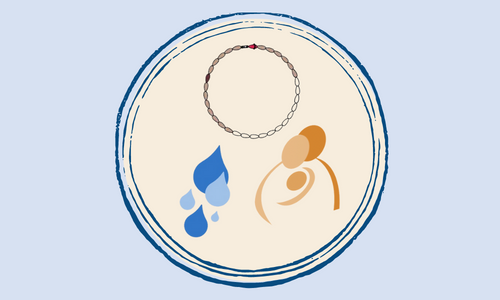
The Standard Days Method (SDM) is based on monitoring the days of a woman's menstrual cycle. Appropriate for women who usually have menstrual cycles between 26 and 32 days long, the method identifies days 8 through 19 as the fertile days. To use the method, the woman tracks her menstrual cycle and avoids unprotected sex on the fertile days. A woman can use CycleBeads®, a color-coded string of beads, to help track the days of her menstrual cycle and to see which days she is most likely to get pregnant. More >
TwoDay Method®
The TwoDay Method uses cervical secretions as the indicator of fertility. If the woman notices secretions of any type, color, or consistency on the current or previous day, she considers herself fertile. The woman checks for cervical secretions every day on her underwear, by using her fingers/tissue paper, or by observing sensation in or around the vagina. More >
Lactational Amenorrhea Method
The Lactational Amenorrhea Method (LAM) is based on a woman's natural infertility resulting from breastfeeding, along with the absence of menstrual bleeding during the first six months after the baby is born. LAM is a highly effective family planning method that also supports the timely transition to other methods of family planning. More >
Billings Ovulation Method/Cervical Mucus Method
The Billings Ovulation Method, also called the Cervical Mucus Method, is based on understanding and interpreting changing cervical secretions that are produced at the neck of the uterus (cervix). At the time of greatest fertility, these secretions become clear, stretchy, slippery and wet. Couples who wish to avoid pregnancy abstain from unprotected intercourse from the onset of cervical mucus symptoms until three days after the last day of fertile-type secretions.
Basal Body Temperature
Women using the Basal Body Temperature (BBT) method identify their fertility by observing their body temperature each morning before beginning any activity. The body temperature is lower before ovulation and rises slightly to about .2 degrees Celsius or .4 degrees Fahrenheit after ovulation. Couples who wish to avoid a pregnancy abstain from unprotected intercourse from the onset of menses until three days after the woman's basal body temperature has risen (to about .2 degrees Celsius or .4 degrees Fahrenheit), signifying the end of the fertile phase.
Symptothermal Method
The Symptothermal Method involves observing changes in the cervical secretions, along with changes in the basal body temperature, and the position and feel of the opening of cervix. Other fertility signs such as mid-cycle pain or bleeding may accompany ovulation. Couples who wish to avoid pregnancy abstain from unprotected intercourse during the fertile period identified by all the fertility indicators.
For IRH-developed resources and suggested readings on the topic of natural family planning, click Other NFP Resources >